
That Frustrating Moment When Your Garage Door Won't Stay Closed
You press the button on your remote, the garage door starts its descent, and then — just before it reaches the floor — it reverses and goes right back up. You try again. Same thing. Maybe it works on the third attempt, or maybe it doesn't work at all. Either way, you're standing in your driveway in Madison wondering what just happened.
This is one of the most common garage door complaints we hear at Madison Door & Opener, and the good news is that it's usually caused by something identifiable and fixable. Let's walk through the most likely reasons your garage door reverses before closing and what you can do about each one.
Understanding Your Garage Door's Safety System
Before diving into causes, it helps to understand why your garage door is designed to reverse in the first place. Federal regulations have required garage door openers manufactured after 1993 to include two key safety features:
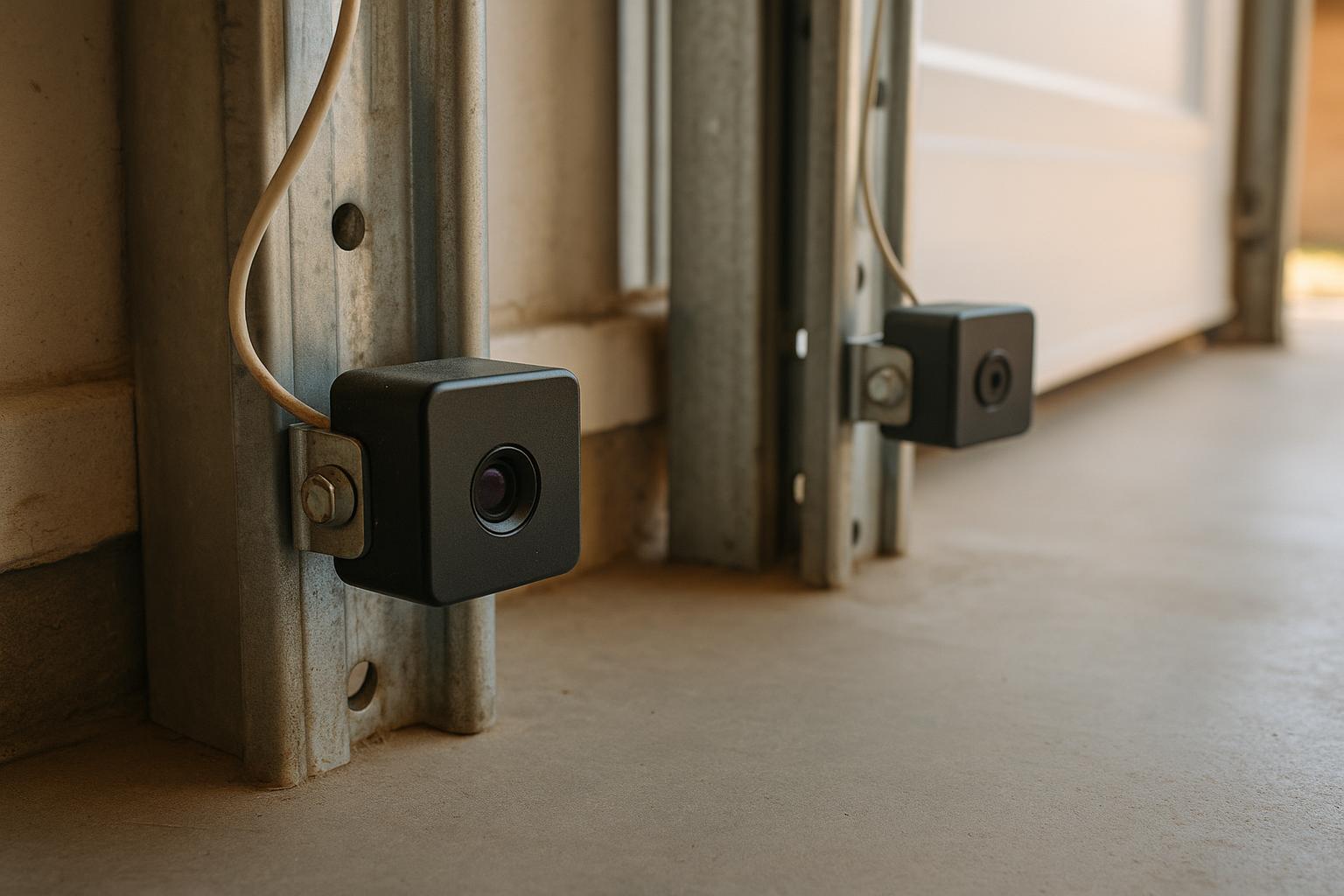
- Photo-eye sensors: These are the small sensors mounted near the bottom of your garage door tracks on either side. They project an invisible beam across the opening. If anything breaks that beam while the door is closing, the opener reverses the door to prevent injury or damage.
- Auto-reverse mechanism: If the door encounters physical resistance while closing — like hitting an object or the floor with too much force — it automatically reverses direction.
Both of these features exist to protect your family, pets, and property. When your door reverses unexpectedly, it usually means one of these safety systems has been triggered, even if there's nothing actually in the way.
Common Cause #1: Misaligned or Dirty Photo-Eye Sensors
This is the number one reason garage doors reverse before reaching the floor. The photo-eye sensors on either side of your garage door need to be perfectly aligned with each other to maintain their infrared beam. Over time, they can get bumped, shifted by vibration, or simply drift out of alignment.
Here's what to check:
- Look at both sensors. Most models have a small LED light — typically one green and one amber. If one light is blinking or off, that sensor may be misaligned.
- Gently clean both sensor lenses with a soft cloth. Dust, cobwebs, and even condensation from our humid Alabama summers can block the beam.
- Make sure nothing is obstructing the path between the two sensors — a broom leaning against the wall, a trash can that shifted, or even tall grass if the sensors are near ground level.
If cleaning and clearing the area doesn't help, the sensors may need to be physically realigned. This is a straightforward fix, but if you're not comfortable adjusting them yourself, a technician can take care of it quickly.
Common Cause #2: Incorrect Close-Limit Settings
Your garage door opener uses limit settings to know how far the door should travel when opening and closing. If the close-limit setting is off, the opener may think the door has hit an obstruction when it's actually just reaching the floor. The opener interprets this as resistance and triggers the auto-reverse.
Adjusting limit settings involves turning small screws or dials on your opener unit, and the process varies by brand and model. Check your owner's manual for specific instructions. Small adjustments — usually a quarter turn at a time — are all that's needed. Over-adjusting can cause the door to press too hard against the floor, which creates a different set of problems.
Common Cause #3: Worn or Damaged Tracks
Your garage door travels along metal tracks on both sides. If those tracks are bent, dented, or have accumulated debris, the door can bind or encounter resistance during its travel. When the opener senses that resistance, it reverses.
Visually inspect both tracks from top to bottom. Look for:
- Visible bends or dents in the metal
- Gaps between the track and the wall-mounted brackets
- Dirt, grease buildup, or small objects lodged in the track
Minor debris can be cleaned out carefully, but bent or damaged tracks should be repaired by a professional. Attempting to bend tracks back into shape without proper tools can make the problem worse or create a safety hazard.
Common Cause #4: Broken or Worn Springs
Garage door springs bear the weight of the door and help the opener raise and lower it smoothly. When springs begin to wear out or lose tension, the door becomes heavier for the opener to manage. This added strain can cause the opener to interpret normal closing as meeting resistance, triggering a reversal.
Spring issues are something homeowners in Madison and throughout the Huntsville area deal with regularly, especially as temperature swings between seasons put extra stress on the metal. We strongly recommend leaving spring repair and replacement to trained professionals. Garage door springs are under extreme tension and can cause serious injury if handled incorrectly.
Common Cause #5: Opener Logic Board Issues
If you've checked the sensors, tracks, springs, and limit settings and the door still reverses, the problem may be with the opener's logic board — essentially the brain of the system. Power surges, age, and general wear can cause the control board to malfunction and send incorrect signals.
Logic board replacement is typically more cost-effective than replacing the entire opener, but it requires matching the correct board to your specific model. A garage door technician can diagnose whether this is the issue and source the right part.
When to Try a Fix Yourself vs. Call a Professional
Some of these issues are safe and simple for homeowners to address on their own:
- Cleaning photo-eye sensors
- Removing debris from tracks
- Checking for obvious obstructions
- Making small limit-setting adjustments per your manual
However, you should call a professional for:
- Spring replacement or adjustment
- Track realignment or repair
- Opener motor or logic board diagnosis
- Any situation where the door behaves unpredictably or feels unsafe
At Madison Door & Opener, we see these issues daily across Madison, Huntsville, Decatur, Athens, and the surrounding communities. Most reversing problems can be resolved in a single service visit, and catching them early prevents more expensive repairs down the road.
Don't Ignore a Reversing Garage Door
It might be tempting to just keep pressing the button until the door cooperates, but a garage door that reverses inconsistently is telling you something is wrong. Ignoring the problem can lead to additional wear on your opener motor, damaged tracks, or a door that eventually stops working altogether — often at the worst possible time.
If your garage door has been giving you trouble and the basic troubleshooting steps above haven't solved it, give us a call. We'll diagnose the issue, explain your options clearly, and get your door working the way it should. That's what honest, reliable service looks like — and it's what we do every day here in Madison.