
Your Garage Door Springs Are Doing More Work Than You Think
Every time you open and close your garage door, the springs are doing the heavy lifting — literally. A standard two-car garage door can weigh between 150 and 250 pounds, and without properly functioning springs, your opener alone couldn't move it. Springs counterbalance that weight, making the entire system work smoothly and safely.
But like any mechanical component under constant stress, garage door springs wear out over time. For homeowners in Madison, where garage doors often cycle multiple times a day between family schedules, weather changes, and daily routines, spring wear is one of the most common — and most important — maintenance concerns to stay on top of.
So how do you know when it's time for a replacement? Let's break it down.
How Long Do Garage Door Springs Typically Last?
Most standard garage door springs are rated for approximately 10,000 cycles. One cycle equals one full open-and-close of the door. If your household opens and closes the garage door four times a day, that adds up to roughly seven years of use before the springs reach the end of their expected lifespan.
Of course, that number can vary based on several factors:
- Spring quality: Higher-grade springs or high-cycle springs (rated for 25,000 or even 50,000 cycles) last significantly longer but cost more upfront.
- Door weight: Heavier doors — especially insulated or solid wood models — put more strain on springs and may shorten their lifespan.
- Climate: Temperature swings, like the ones we experience in North Alabama between hot summers and cold winter mornings, cause metal to expand and contract, which can accelerate fatigue over time.
- Maintenance: Springs that are regularly lubricated and inspected tend to last longer than those that are neglected.
Torsion Springs vs. Extension Springs
Before we go further, it helps to understand the two main types of garage door springs:
Torsion Springs
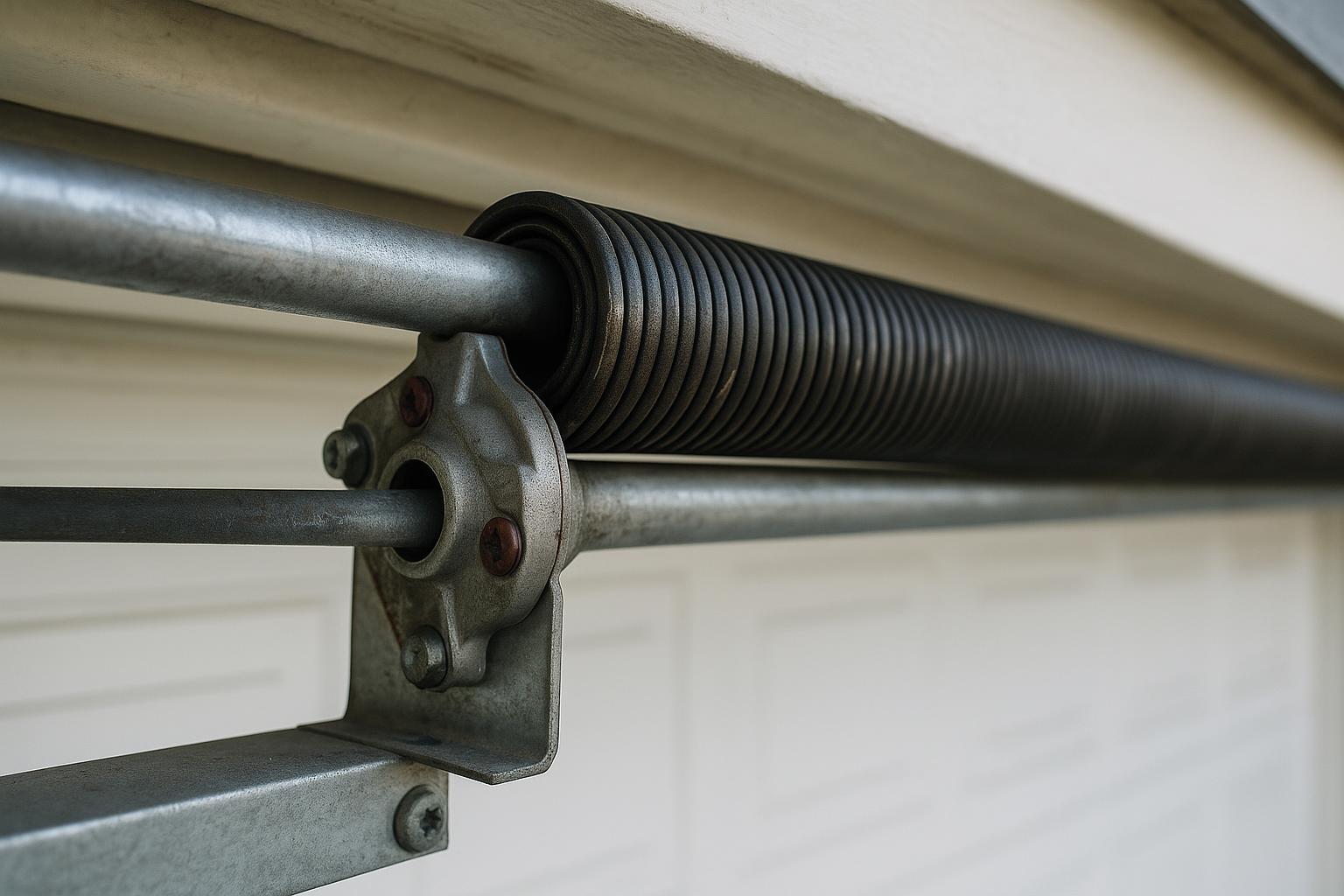
These are mounted on a metal shaft directly above the garage door opening. They use torque — a twisting force — to lift the door. Torsion springs are the more common choice for modern residential garage doors and are generally considered safer and longer-lasting.
Extension Springs
These run along the horizontal tracks on either side of the door and stretch to store energy. Extension springs are more common on older or lighter doors. They tend to wear out faster and can be more dangerous when they break if they don't have safety cables installed.
Regardless of which type your garage door uses, the replacement timeline and warning signs are similar.
Warning Signs Your Springs Are Wearing Out
You don't have to wait for a spring to snap to know it needs replacing. Here are the most common signs that your garage door springs are nearing the end of their life:
1. The Door Feels Heavier Than Usual
If you disconnect the opener and try to lift the door manually, it should move relatively easily. If it feels significantly heavier or won't stay open on its own about three to four feet off the ground, the springs are losing their tension.
2. The Door Opens Unevenly
When one spring weakens faster than the other (especially on two-spring systems), the door may tilt or rise crookedly. This puts extra strain on the opener, the tracks, and the remaining spring.
3. Visible Gaps in the Spring Coils
Take a look at your torsion spring when the door is closed. A healthy spring has tightly wound coils with uniform spacing. If you notice a visible gap or separation in the coils, the spring has likely already broken or is about to.
4. Loud Bang from the Garage
If you heard a loud bang — almost like a gunshot — coming from your garage when no one was in there, that's the telltale sound of a spring breaking. The door may still technically operate after one spring breaks, but it shouldn't be used until both springs are replaced.
5. The Opener Struggles or Stops Mid-Cycle
Your garage door opener is designed to work with the springs, not to replace them. If the opener is straining, stalling, or shutting off before the door fully opens, failing springs could be the underlying cause.
6. The Door Slams Shut Quickly
Springs control the speed at which your door closes. If the door drops faster than normal or slams to the ground, the springs aren't providing adequate resistance anymore. This is a safety hazard, especially for families with children or pets.
Can You Replace Garage Door Springs Yourself?
This is one of the most common questions we get from homeowners in Madison and throughout the Huntsville area, and the answer is straightforward: we strongly advise against it.
Garage door springs are under extreme tension. A torsion spring on a standard residential door can hold enough force to cause serious injury — or worse — if it's handled improperly. Professional technicians use specialized tools, winding bars, and safety protocols to replace springs correctly.
Beyond safety, there's also the matter of getting the right spring for your specific door. Springs need to be matched to the door's weight, height, and track configuration. Installing the wrong spring can damage your opener, warp the tracks, or create an unsafe operating condition.
Should You Replace One Spring or Both?
If your garage door has two torsion springs and one breaks, we almost always recommend replacing both at the same time. Here's why:
- Both springs were installed at the same time, so if one has reached the end of its life, the other is likely close behind.
- Replacing both ensures even tension and balanced operation.
- It saves you the cost of a second service call in the near future when the other spring inevitably gives out.
Think of it like replacing tires — you wouldn't put one new tire on and leave the other three bald.
How to Extend the Life of Your Garage Door Springs
While springs won't last forever, a little preventive maintenance goes a long way:
- Lubricate the springs every three to four months with a silicone-based garage door lubricant. This reduces friction and helps prevent rust.
- Schedule annual inspections. A professional can measure spring tension, check for wear, and catch small problems before they become big ones.
- Keep the door balanced. If the door isn't properly balanced, the springs work harder than they need to. A technician can adjust the balance during a routine maintenance visit.
- Consider upgrading to high-cycle springs if you use your garage door frequently. The upfront cost is higher, but the extended lifespan often makes it worthwhile.
When to Call a Professional in Madison
If you've noticed any of the warning signs above — or if it's simply been seven or more years since your springs were last replaced — it's worth having a professional take a look. Catching a worn spring before it breaks means less downtime, less risk of damage to your door or opener, and most importantly, a safer garage for your family.
At Madison Door & Opener, we handle spring replacements for homeowners across Madison, Huntsville, Decatur, Athens, Harvest, and Meridianville. We'll assess your current springs, recommend the right replacement, and get the job done quickly so your door is back to working safely and smoothly.
Don't wait for the loud bang. If your springs are showing their age, give us a call today and let us take care of it before it becomes an emergency.